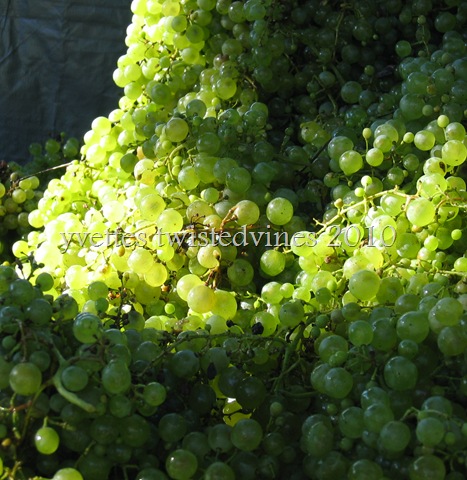
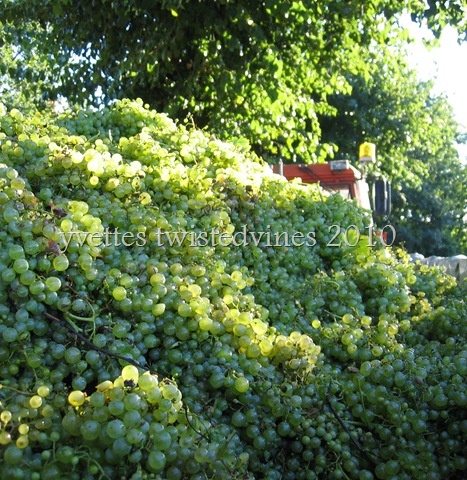
This weekend marked the start of our harvesting of Prosecco grapes. Our grapes are harvested by hand,and it’s a family affair.
Our grapes form part of a communal winery.To produce great wine, the fruit should have a high sugar content…we have a certain quantity of grapes to produce and sugar content to abide by under the DOC guidelines: Denomonizione di Origine Controllata. DOC wines are produced in specific well-define regions, according to specific rules,designed to preserve the traditional wine-making practises of the individual regions. Ours region, Piave or Vini del Piave produced in the provinces of Treviso and Venice.
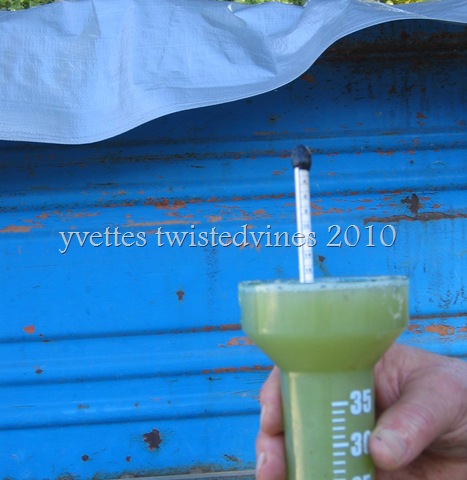
We check the sugar content by pressing whole grapes (using something similar to a potato presser) using only the juice and measuring the sugar content…
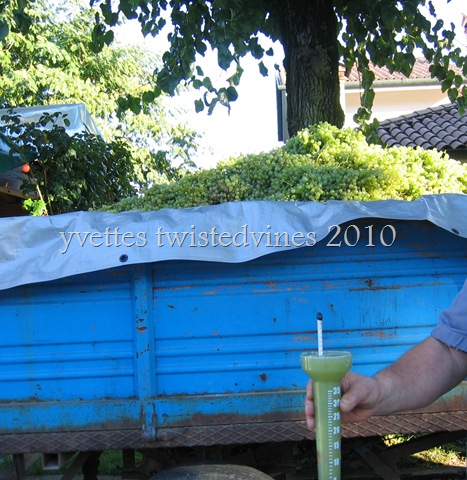
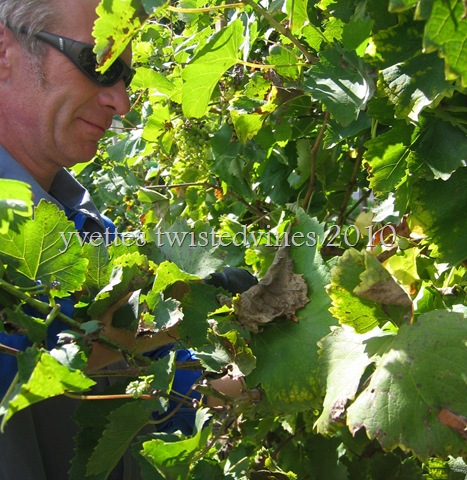
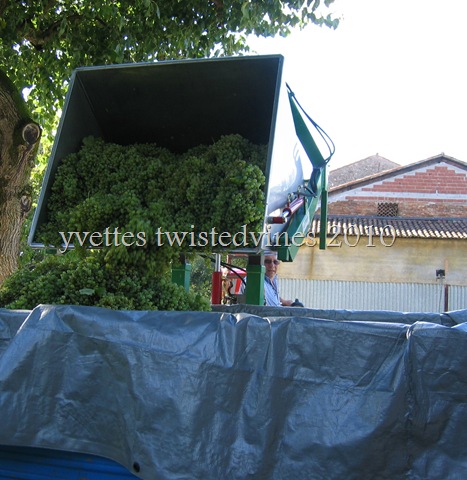
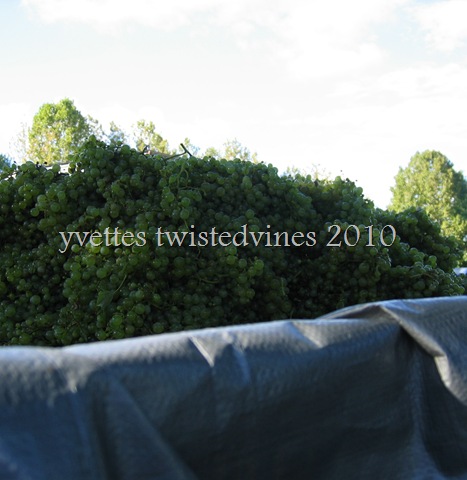
Our grapes are transported to a communal winery where they continue their journey in the wine making process.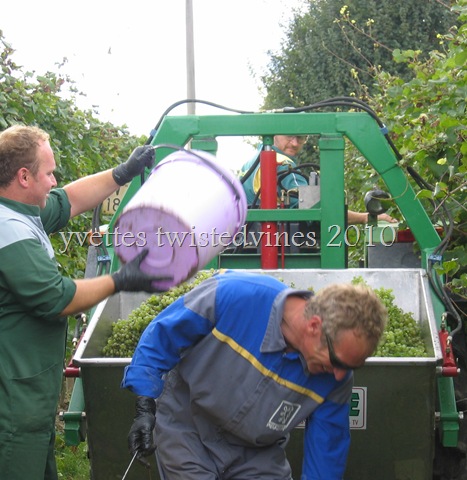
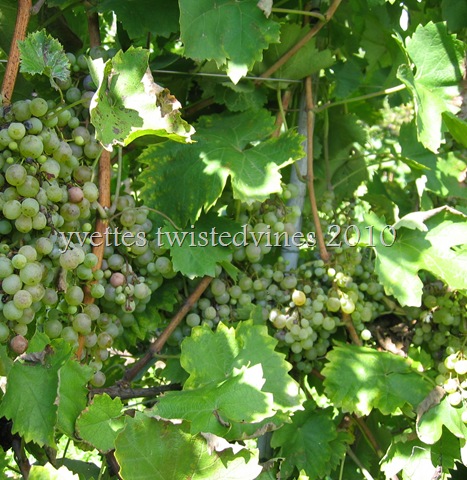
Due to the privacy act I wasn’t allowed to photograph in our winery, however our friend has his own winery, a beautiful old restored building and he was happy to let me take some images of the wine process..read on to see these images…
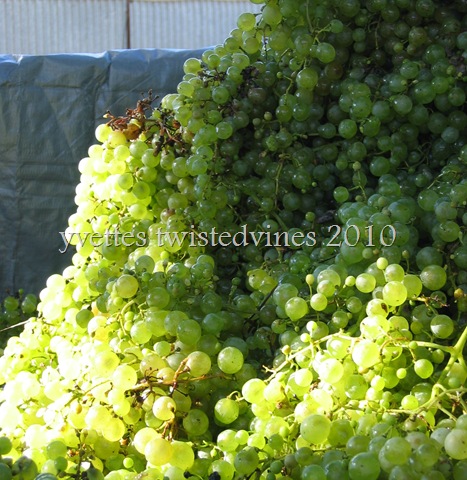
Harvesting of grapes can be picked by hand or machine.Note the difference of these grapes that have been machine picked. Grapes are then transferred to a stemmer/crusher where the stems are removed and the grapes are crushed…
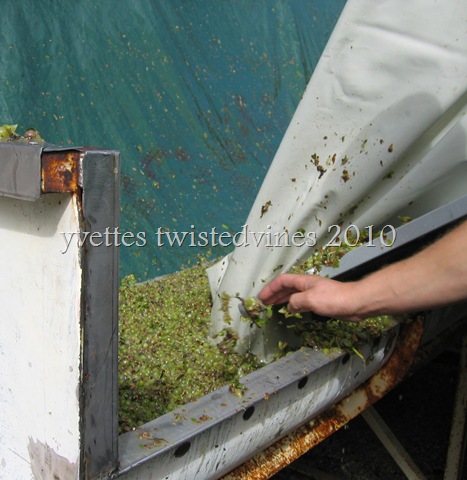
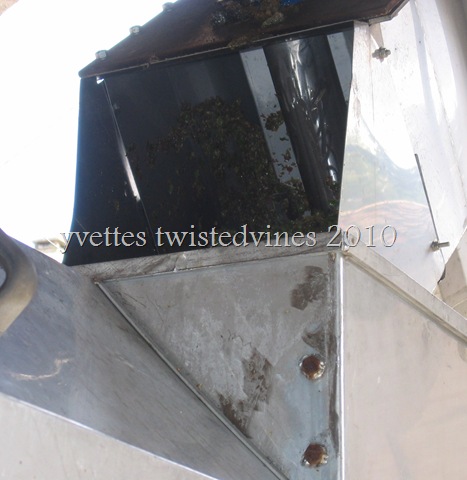
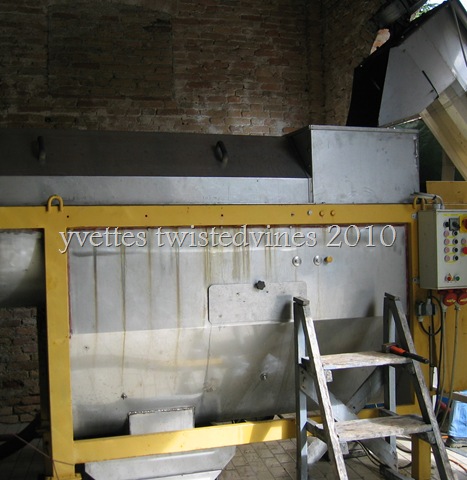
The grapes from here are transferred to a vat where skins and stems are separated…
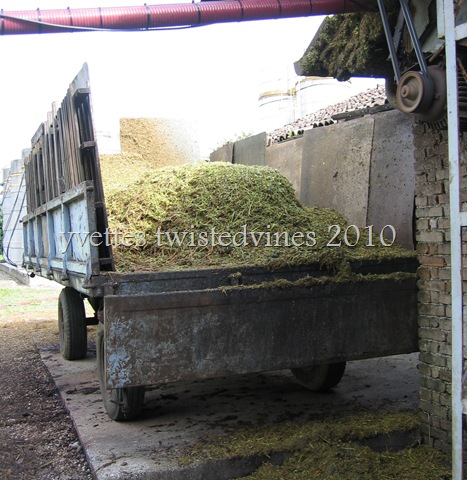
The stems are used for energy…
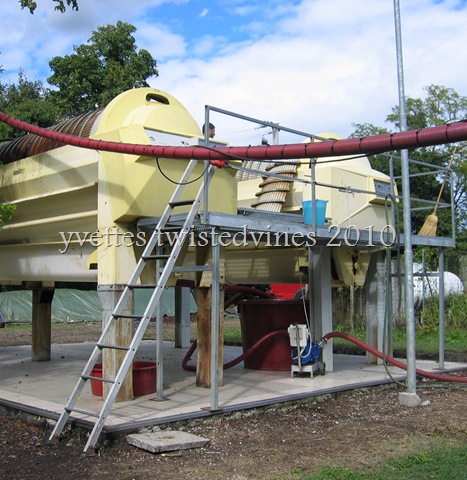
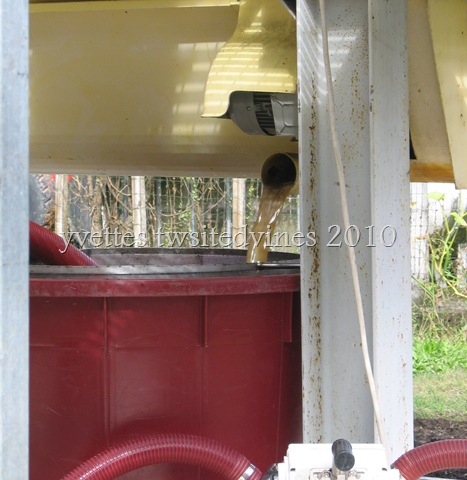
The grape juice then travels on it’s journey to holding tanks. These tanks are cooled at 15°C and the sediment from the fruit drops to the bottom.
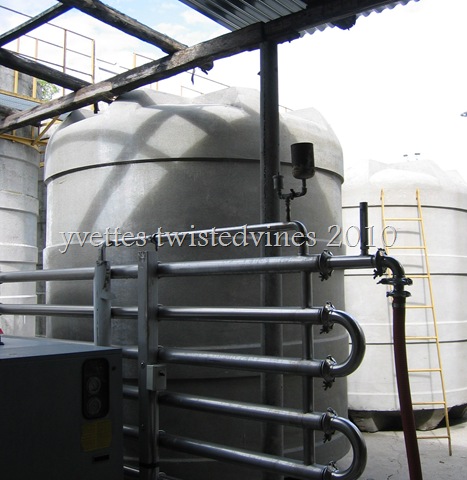 The sediments are removed and this liquid can now be called wine, it’s then transferred to the fermentation vats,where alcoholic fermentation takes place (the conversion of sugar into alcohol and CO2, these vats contain 300 gallons of wine (that’s a lot of hip cupping my friends).
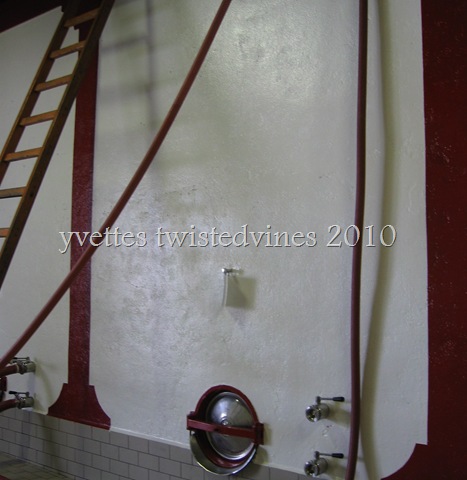
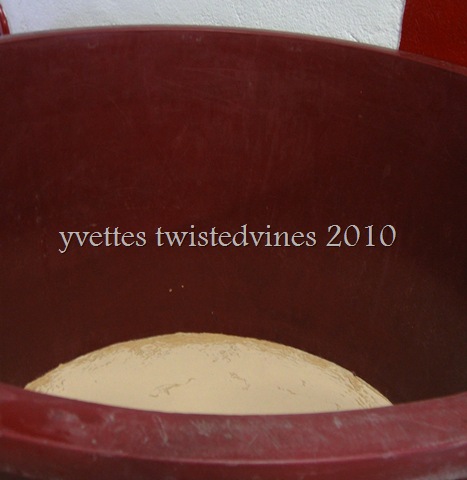
Yeast convert sugar into alcohol and carbon dioxide. Fermentation is a bubbly,foamy ,biological process. It’s a slow process over a period of ten to thirty days. The loss of cloudiness indicates that fermentation is complete.
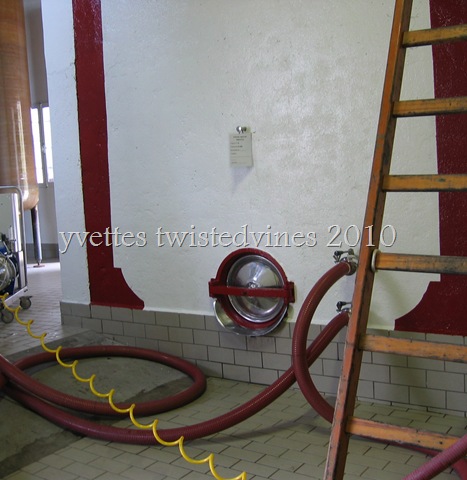
After fermentation, the wine is drawn off to separate it from the dead yeast cells and other sediments that have precipitated from the juice. The wine is chilled to create more clarification, and then bottled.
 A lot of work but a great satisfaction afterwards…
..thanks to our friend for giving me the opportunity to share these photo’s with you,
..a long weekend but happy the harvest is over…just another day on the land.
Yvette…x
 Yvette's Twistedvines
Thanks for such a fabulous photo-story, Yvette! Nice to see the process from beginning to almost the end..
Bottling stage is a little harder to get photo’s maybe we can skip it and just get to the relaxing afternoon with a glass of Prosecco!…
How interesting Yvette. Thank you for taking all those photos. I’ll bet that glass of prosecco tastes even better after you have taken a hand in all the production of it.
Time for a little bellini perhaps?